
Adult autism, ADHD and combined assessments
If you are investing time, money and emotional energy in an assessment, you deserve more than a sequence of forms and a certificate-shaped answer.
At SWAN, assessment is a careful, collaborative exploration of the whole pattern: how your mind works, how you have adapted, what has been misunderstood, what else may be contributing, and what you need now.
Diagnosis is never guaranteed. Attention, honesty and useful understanding are.
Submitting an enquiry does not create a payment commitment or confirm an appointment.
Explore packages and feesA personalised written report, a feedback appointment and recommendations relevant to your life.
All assessment packages include the £350 initial consultation.
Who I work with
Adults aged 18 and over.
Assessment pathways
Autism, ADHD and combined autism and ADHD assessments.
Where we meet
Mainly online across the UK, with limited in-person appointments at Magnolia Therapy Centre, Nottingham NG5.
Timing and pace
The work is spread across several appointments. We take our time and agree together at each stage what we need next. I will adapt to your processing speed and individual needs, so you can feel supported and seen every step of the way.
We will agree an initial plan together, with room for flexibility as we get to know each other.
You don’t have to fit a stereotype to be worth assessing.
Perhaps you’ve:
Gone down so many autism or ADHD research rabbit holes that you’re practically an honorary researcher by now.
Had friends affectionately tease you about your quirks, or repeatedly suggest that you might be neurodivergent. At some point, you started wondering whether they had a point.
Spent hours scrolling through neurodivergent social media, feeling uncannily understood but somehow not quite entitled to join the conversation.
Developed elaborate systems to manage things that other people seem to do without thinking.
Been told you’re too articulate, too sociable, too successful or simply too good at holding everything together.
Collected explanations for your difficulties over the years, but still feel like there’s a piece of the puzzle missing.
Reached a point where the strategies that have kept you going are no longer quite enough.
Or perhaps you’re simply curious about yourself and want to understand why being you feels the way it does.
You don’t need to arrive with a meticulously researched case for your own neurodivergence (although you’re very welcome to bring your colour-coded spreadsheet).
You can come with questions, doubts, suspicions, or a lifetime of experiences that you’re not quite sure how to put into words.
We’ll work it out together.
Thorough does not have to mean cold.
One accountable assessor
I currently complete SWAN assessments myself and remain responsible for the clinical decision and report sign-off. If a particular question genuinely requires additional specialist input, I will explain why and agree the implications with you first. An extra clinician is not added as a routine hoop or marketing claim.
Lived understanding, used carefully
I am an AuDHD clinician. I understand from the inside why masking, shame and doubt can make assessment feel exposing. I also know that my experience is not a template for yours. Lived understanding helps me ask better questions; it does not replace clinical reasoning.
Questionnaires in their proper place
Scores can support an assessment. They cannot tell us who you are, how you adapted, what the effort costs, or why a pattern appears in some settings and not others. Tools and questionnaires inform the decision; they do not make the decision by themselves. We complete the questionnaires together so that we can talk through all the “it depends” answers that I know you’ll want to use. And I’m not a teacher. We may in exceptional circumstances agree that doing a questionnaire at home is useful, but I don’t enjoy giving out homework!
Complexity without diagnostic collecting
We consider trauma, anxiety, depression, physical health, sleep and other neurodevelopmental differences because accuracy matters. The point is not to gather the largest possible collection of labels. It is to explain what genuinely needs explaining.
Strengths without compulsory positivity
Your interests, loyalty, creativity, pattern recognition, justice sensitivity, humour or persistence do matter. So do exhaustion, disability, grief and support needs. Affirming practice means respecting the whole truth, not insisting every difficulty is secretly a superpower.
But if you are actually a superhero, your identity is safe with me.
A meaningful ending
The feedback conversation is not an afterthought. Whatever the outcome, we make space for what it means, what questions remain and what you may want to do next.
Three pathways. One thoughtful approach.
Autism assessment
£2,000
Complete assessment package.
Explore your lifelong experiences through an autistic lens.
Initial consultation included.
Agreed appointments, a personalised report and a dedicated feedback appointment.
Is this pathway for me?
Autism assessment
For adults who want to explore whether an autistic pattern best explains their lifelong experiences of communication, connection, sensory processing, predictability, interests, masking, overwhelm and adaptation.
The assessment does not rely on whether you make eye contact, enjoy people, have a job, understand humour or match somebody else’s idea of what an autistic person looks like.
Package fee: £2,000 in total, including the £350 Initial Assessment and Planning Consultation. If you continue within eight weeks, the remaining balance is £1,650.
Ask about an autism assessmentADHD assessment
£2,000
Complete assessment package.
Understand your attention, motivation and regulation.
Initial consultation included.
Agreed appointments, a personalised report and a dedicated feedback appointment.
Is this pathway for me?
ADHD assessment
For adults exploring longstanding differences in attention, activity, impulse control, motivation, time, memory, organisation, task initiation and regulation – including people whose hyperactivity is internal, hidden or channelled into relentless doing.
We consider childhood evidence, current impact and other possible explanations. If ADHD is identified, the report can support a conversation with a medical prescriber, but SWAN does not prescribe medication.
Package fee: £2,000 in total, including the £350 Initial Assessment and Planning Consultation. If you continue within eight weeks, the remaining balance is £1,650.
Ask about an ADHD assessmentCombined autism and ADHD assessment
£2,850
Complete assessment package.
Explore autism and ADHD together, including how they interact.
Initial consultation included.
Agreed appointments, a personalised report and a dedicated feedback appointment.
Is this pathway for me?
Combined autism and ADHD assessment
For adults who recognise both patterns, or who are unsure because autism and ADHD seem to explain different, sometimes contradictory parts of their life.
The combined pathway considers the interaction rather than treating you as two unrelated checklists. It can help make sense of experiences such as craving structure while struggling to maintain it, needing predictability and novelty, or being intensely focused and chronically unable to start.
Package fee: £2,850 in total, including the £350 Initial Assessment and Planning Consultation. If you continue within eight weeks, the remaining balance is £2,500.
Ask about a combined assessmentAll pathways include the agreed assessment appointments, personalised report and feedback.
Flexible payment plans are available. Instalments are agreed individually before the full assessment begins.
Begin with confidence
You don’t need to have everything figured out before we meet.
Every assessment begins with an Initial Assessment and Planning Consultation, where we get to know each other, explore your questions and make sure we are taking the right approach.
You are welcome to book your full assessment from the outset, knowing that if either of us feels after our first appointment that continuing isn’t the right next step, you will only pay for the initial consultation (£350). Any additional assessment fees you have already paid will be refunded.
If we continue, the initial consultation is included in your total assessment fee.
You can choose to pay in full or spread the cost across several instalments, depending on what works best for you.
Payment options and full fee details
Payment options
- Pay in full upfront.
- Pay £350 for the initial consultation and then pay the remaining balance.
- Agree a flexible instalment plan.
- Autism assessment remaining balance
- £1,650
- ADHD assessment remaining balance
- £1,650
- Combined autism and ADHD assessment remaining balance
- £2,500
If you proceed within eight weeks, the £350 initial consultation fee is deducted from the total package price.
The package fee is designed to cover the usual complexity of a thoughtful adult assessment, including time to explore masking, overlapping experiences, developmental history, mental and physical health, burnout and other possible explanations. Very occasionally, something may arise that means an additional appointment, specialist input or extra written work would be helpful. If that happens, I will discuss it with you first, explain the options clearly, and agree any additional cost before anything is added.
A standalone consultation, for assessment questions or one specific problem
A standalone consultation
Standalone consultation: £350 for up to 120 minutes.
This focused consultation is for adults who want to explore questions about autism, ADHD or AuDHD, or pick my brain and work through one specific problem together. You do not need to be considering an assessment to book. It does not provide a diagnosis and is not a lower-cost substitute for the assessment process.
It can help you clarify what may be relevant, understand NHS or Right to Choose options, prepare for a conversation with your GP, compare possible routes and unblock next steps when the system feels overwhelming. Where appropriate, I may provide a brief letter summarising the discussion and why further assessment may be worth considering.
Ask about a standalone consultationWhat to expect, step by step
Start with a conversation
A brief enquiry, followed by a 90 to 120 minute Initial Assessment and Planning Consultation (£350).
Explore this stage
Structured enquiry
You tell us whether you are considering autism, ADHD or both, what has brought you to assessment now, and any practical requirements. The form is deliberately brief. Please do not send your entire clinical history at this stage.
Initial Assessment and Planning Consultation
If SWAN appears suitable, we arrange a paid 90 to 120 minute first appointment at £350. This is a real clinical consultation, not a sales call. We explore your questions, relevant history and current life, consider whether SWAN is the right service, and decide what assessment route is most likely to answer the question well.
You can stop after this consultation. If you proceed to a full SWAN assessment within eight weeks, the £350 is already included in the package price and is deducted from the remaining balance.
Shape the right pathway
We agree which pathway will answer your questions, with fees, inclusions and a proposed timetable in writing.
Explore this stage
A clear recommendation before the full assessment
I explain whether I recommend an autism, ADHD or combined AuDHD pathway, or whether another route may fit better. My assistant and/or I then send the proposed timetable, total fee, payment stages, cancellation terms and inclusions in writing. If autism and ADHD both appear clinically relevant, I may recommend considering them together rather than artificially splitting the questions.
Explore your experiences
Questionnaires, developmental information and assessment conversations, with adjustments and a pace that works for you.
Explore this stage
Information gathering
You may be invited to complete selected questionnaires and share relevant documents. Where possible, developmental information from somebody who knew you in childhood is useful. Memory is imperfect; “not sure” is valid data, not a failed homework assignment.
Assessment conversations
Conversations are structured enough to cover the relevant evidence and flexible enough to follow what matters. Questionnaires are completed collaboratively, so we can discuss what a question means, what comes up while answering it and how your lived experience fits with the score. Breaks, notes, movement and other communication adjustments can be discussed.
Bring the picture together
Careful clinical reasoning brings the evidence, alternative explanations and diagnostic criteria together.
Explore this stage
Bringing the evidence together
I review the different sources and build a clinical account of how the pattern developed, what supports or complicates it, and whether diagnostic criteria are met. Assessments are guided by recognised diagnostic frameworks, including DSM-5 and ICD-11, alongside NICE-informed good practice. The professional term for the wider account is psychological formulation; in ordinary language, it means making sense of why this pattern looks the way it does in your life.
Make sense of what we found
A dedicated feedback conversation, a personalised written report and recommendations relevant to your life.
Explore this stage
Outcome and feedback
We discuss the outcome, the reasoning behind it, what remains uncertain and what may help next. You can ask questions. There is no dramatic envelope-opening ceremony unless you particularly want one.
Written report
You receive a full written report after the agreed information has been integrated and the account has been checked. I always provide a shorter confirmation letter alongside the report so you can confirm the outcome without sharing your full personal and medical history. The report should be clinically clear and useful to you, not merely technically correct. It may support conversations about reasonable adjustments and future care, but each receiving organisation makes its own decision about what it will accept.
If you need a report for a legal, court or occupational process, please discuss this with us when you enquire. We can agree different report formats and diagnostic or recommendation letters to fit different needs. Please check the receiving organisation’s requirements before booking.
What the assessment explores
We build a picture, not a prosecution case.
Depending on your question, the assessment may explore:
- early development and childhood experiences
- attention, activity, impulsivity and executive functioning
- communication and social connection
- sensory processing, movement and regulation
- routines, interests, predictability and change
- education, work and daily living
- friendships, intimacy and family relationships
- masking, camouflaging and compensatory strategies
- burnout, shutdown, overwhelm and recovery
- anxiety, mood, trauma, sleep, physical health and other possible explanations
- strengths, values, interests and the settings in which you function best
The purpose is not to make every experience “a symptom”. It is to understand which patterns are longstanding, how they interact, what causes difficulty, and what makes life more possible.
Different people need different things.
And as much as I’d love to help everyone, SWAN might not be the right fit if:
You’re looking for the assessment equivalent of a drive-through.
Quick, inexpensive, in and out, preferably before lunchtime. I understand the appeal, particularly if you’ve already spent years waiting for answers.
My approach is a little more slow-cooked. We take our time, explore the different ingredients of your experience and make sense of how they come together. Hopefully, with considerably less emotional indigestion.
You’re wondering how to make the numbers work.
I can offer payment plans.
However, if a full private assessment isn’t financially viable, or you’d prefer to pursue an NHS or Right to Choose pathway, I also offer one-off consultations to help you prepare for conversations with your GP, explore your options or tackle the mountain of paperwork that can come with these processes.
The standalone consultation is up to 120 minutes and even though that won’t be long enough for a full assessment, it can leave you with a bit more clarity about what might be going on and what might be the best way forward. We can create a letter for your GP or provider summarising what we found.
These standalone sessions aren’t just for assessment thinking. You can also use one to pick my brain and work through one specific problem together.
The fee is £350. This consultation does not provide a diagnosis. NHS and Right to Choose referrals and acceptance are decided by your GP and the receiving provider.
Explore the standalone consultationYou’re looking for an assessment and medication package.
Brains are my thing. Prescription pads, less so.
I’m a Clinical Psychologist, not a medical prescriber. If ADHD medication is something you’d like to explore, I’ll help you understand your options and navigate the next steps, but prescribing and medication titration are not part of the SWAN assessment pathway.
You’re looking for someone to confirm a diagnosis you’ve already decided on.
You are the expert on your own experiences, and I’ll take your understanding of yourself seriously. My role is to bring clinical expertise, curiosity and an open mind to the conversation.
I can’t promise a particular diagnosis. What I can promise is that your experiences will be taken seriously, whatever the outcome.
You’re looking for an assessment for your child.
Little swans deserve thoughtful, specialist assessments too. My assessment practice, however, is dedicated to adults aged 18 and over.
You need support with your mental health first.
Getting the right support comes first when you’re in crisis, and I cannot provide urgent mental health support.
- For ongoing concerns, speak to your GP.
- For urgent mental health support in England, including out of hours, call NHS 111 and select option 2 for mental health.
- If you feel you can’t keep yourself safe, call 999 or go to A&E now.
Useful after the appointment ends
SWAN Psychology
Your story, in writing
Understanding your experiences
Clinical reasoning
Personalised recommendations
Time to tell your story
In-depth conversations to explore your experiences, from childhood to the present day, at a pace that works for you.
Making sense of the whole picture
Specialist assessment and careful clinical reasoning to understand how the different aspects of your experience fit together.
Your story, in writing
A detailed, personalised report that brings together what we have learned, with recommendations tailored to your life and needs.
Finding your way forward
A dedicated feedback appointment to explore what the outcome means for you, ask questions and consider your next steps.
See the full assessment inclusions
The full assessment package includes:
- the agreed assessment appointments
- clinical interviews
- developmental history, using the best available sources
- validated questionnaires and relevant document review
- careful consideration of masking, trauma, mental and physical health, burnout and other possible explanations
- clinical integration and a diagnostic decision where possible
- a full written clinical report
- a feedback appointment
- personalised recommendations and reasonable-adjustment ideas where relevant
- a shorter confirmation letter
I can often include additional letters in the package, for example for work, education or reasonable adjustments. If you need a more involved letter, form or report, we’ll discuss what’s needed and agree any additional cost before I start.
People respond to assessment outcomes in many ways: relief, grief, vindication, doubt, anger, curiosity, a desire to tell everybody, or a strong wish to tell absolutely nobody for a while.
What can happen after assessment?
An answer is the beginning of understanding, not the end.
The feedback session helps you understand the reasoning and consider next steps. Depending on your needs, these may include:
- using the report to request reasonable adjustments
- discussing ADHD medication with a GP or independent prescriber
- a focused post-assessment consultation
- specialist therapy
- learning more slowly, without turning your new understanding into another full-time job
- sharing the outcome with selected people, in your own time
SWAN can offer focused post-assessment therapy, coaching or consultation at the relevant published session fee. If you need another letter after your assessment, we can discuss what would help. There is no requirement to continue working together.
In their own words
I can tell you what I hope an assessment with me will feel like. But perhaps it’s more helpful to hear from people who’ve actually been through it.
Assessment FAQs
Do I need a GP referral?
No GP referral is required for a self-funded private assessment. If an insurer, employer, university or another service is paying, check its referral and report requirements before booking.
Do you assess autism, ADHD or both?
All three routes are available. The £350 initial consultation helps us decide which question and pathway make most clinical sense. If both autism and ADHD appear relevant, I may recommend the combined route so their interaction can be considered properly.
What does AuDHD mean?
AuDHD is an informal term many people use for being both autistic and ADHD. It is not a separate diagnostic category, but it can be a useful shorthand for a combination whose parts sometimes reinforce, conceal or contradict each other.
Do I need to be certain before I enquire?
No. Assessment exists because the question is not settled. It helps if you can describe what has led you to ask now and what you hope the process will clarify.
Is this an exam?
No. There are no correct personality answers and no prize for appearing less neurodivergent. I may ask structured questions so that important evidence is not missed, but you are not being graded on how well you tell your life story.
Can you guarantee I will receive a diagnosis?
No. Paying for an assessment pays for careful clinical work, not a predetermined outcome. I will explain the evidence and reasoning honestly, including where the picture is mixed or another explanation fits better.
What if I do not have a parent or childhood informant?
Tell us in the enquiry. Developmental information is important, but families, memories and relationships are complicated. We can consider other sources such as school reports, records, siblings, relatives, long-term friends and your own developmental account. The absence of one ideal informant does not automatically end the conversation.
What if my parent does not believe in autism or ADHD?
An informant is one source of information, not a referendum on your identity. We consider what they remember, what may not have been visible to them, the language available at the time and the rest of the evidence.
Do you use ADOS-2, ADI-R or DIVA?
I am formally trained in DIVA, ADOS-2 and ADI-R. These tools inform my assessment thinking, but ADOS-2 and ADI-R are not necessarily administered verbatim in every assessment. The choice of tools follows the clinical question, not a production line.
Questionnaires and structured tools contribute evidence; they do not decide the outcome by themselves.
Can my partner or friend contribute?
Often, yes. A partner or friend can describe current patterns and their impact. They cannot replace childhood evidence, but their perspective may still be useful. We will agree what information is needed and how consent will work.
How many appointments are there?
The work is normally spread across several appointments rather than compressed into one long session. The exact number and length depend on whether we are exploring autism, ADHD or both and on the information available. You will receive a proposed timetable before committing to the full pathway, and I will tell you if the clinical scope needs to change.
How long does the whole process take?
Timing depends on availability, the route, how quickly questionnaires and developmental information can be gathered, and the complexity of the evidence. My assistant and/or I will give you the current likely timetable before the full assessment begins. This is an estimate, not a guaranteed express-report date.
Can the assessment be online?
Yes, where online assessment is clinically appropriate. Online is the main way I work and is available across the UK. Limited in-person appointments are available at Magnolia Therapy Centre, NG5, Nottingham. Overseas enquiries may be considered only where the clinical, regulatory and insurance position permits.
Will my GP, employer or university accept the report?
The report is written by an HCPC-registered psychologist and explains the evidence, clinical reasoning and outcome. However, another organisation controls its own policies, and I cannot guarantee acceptance. If you need the report for a particular purpose, ask that organisation for its requirements before booking and tell us in the enquiry.
Do you prescribe ADHD medication?
No. SWAN does not prescribe or titrate medication. If ADHD is identified and you want to consider medication, you will need a GP or appropriately qualified independent prescriber. Acceptance of an external report should be checked with that provider in advance.
Do you assess children?
No. SWAN’s assessment and therapy services are for adults aged 18 and over. I may offer a parent consultation about supporting a neurodivergent child or family relationships, but I do not provide direct child assessment or child therapy.
Can I pay in instalments?
Flexible payment plans are available. Instalments are agreed individually before the full assessment begins. SWAN does not offer retrospective payment after the work has concluded.
What if the outcome is not autism or ADHD?
The feedback and report should still explain what the evidence shows, what may better account for the pattern, what remains uncertain and what next steps may be useful. “Not this diagnosis” should not mean “nothing is happening”.
What if the outcome is inconclusive?
Sometimes the available evidence does not support a confident yes or no. If that happens, I will explain what is clear, what remains uncertain, any limits in the information and what could be useful next. Uncertainty will not be disguised as certainty simply to produce a tidier ending.
Can you write a shorter confirmation letter?
Yes. I always provide a shorter confirmation letter alongside your full report, so you can confirm your diagnosis without sharing all your personal details or life story.
I can often include additional letters in the package, for example for work, education or reasonable adjustments. If it feels like a bigger piece of work, we’ll discuss it together first.
Can you help me access Right to Choose?
I do not provide medication or manage the Right to Choose pathway, but a one-off assessment-pathway consultation can help you understand possible NHS, Right to Choose and GP routes, prepare questions and decide what to do next. Your GP and the receiving provider remain responsible for their own eligibility and referral decisions.
You do not need to prove you deserve to ask the question.
If you have read the process, fees and FAQs and SWAN feels like the right fit, send a structured enquiry. Tell me what you are considering, what has brought you here now and what you hope to understand.
Submitting an enquiry does not create a payment commitment or confirm an appointment.
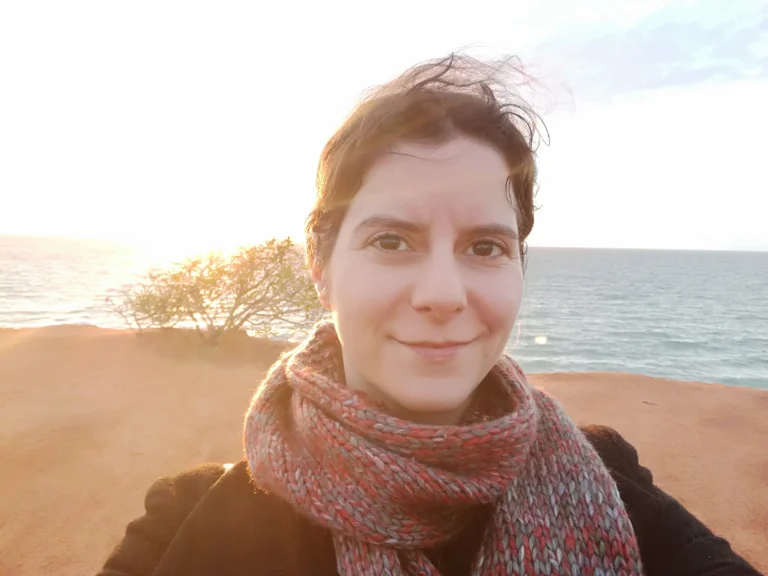
Meet RitaRita Lacerda
HCPC-registered Clinical Psychologist and Counselling Psychologist · PYL33270
SWAN Psychology · info@swanpsychology.org